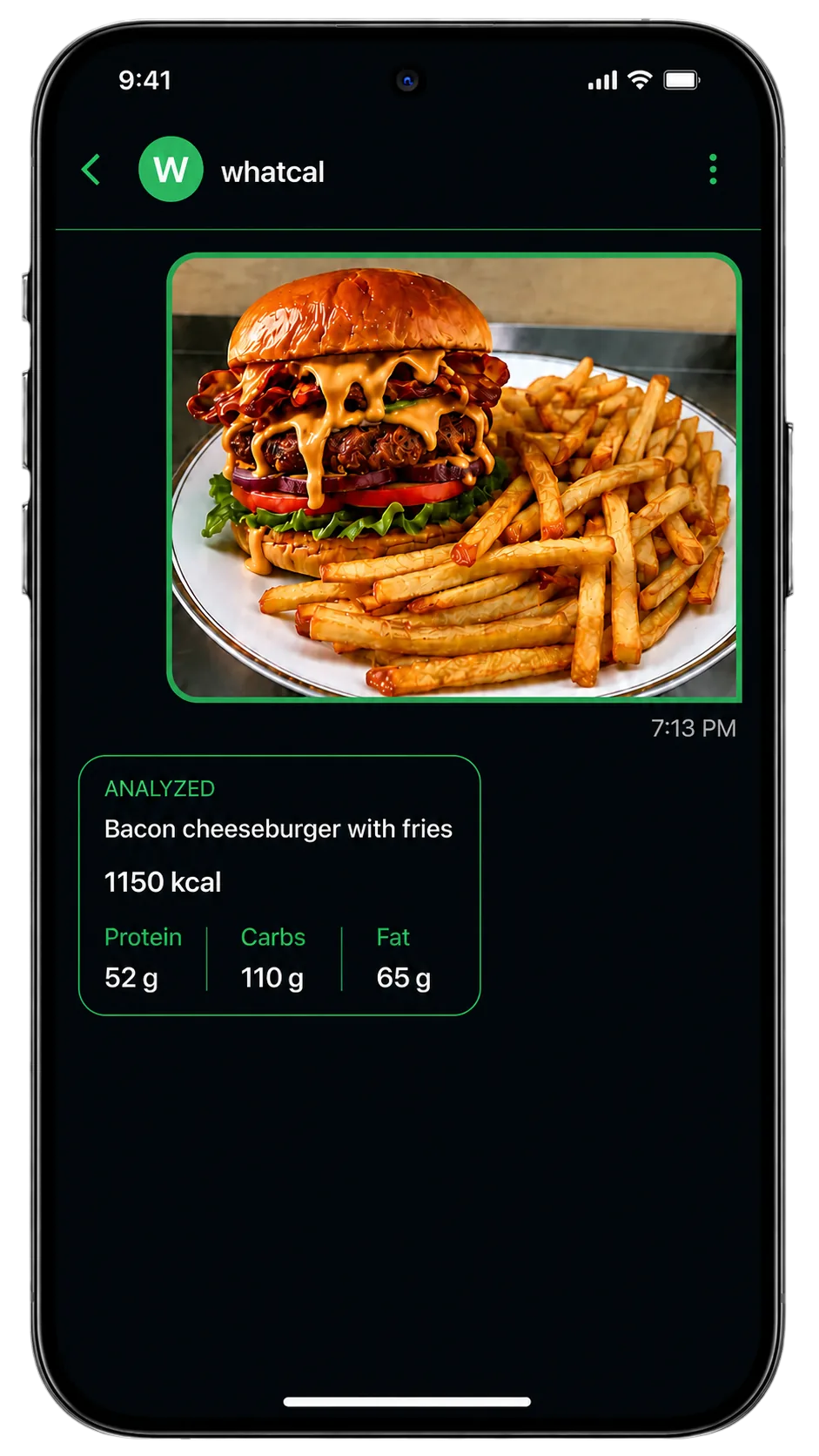
AI calorie counters have made tracking dramatically faster. Point a camera at a plate and get an estimate in seconds. But "how accurate is it?" deserves a straight answer rather than marketing.
The short version: AI is good at identifying foods and reasonable at estimating portions you can see — and limited by everything you can't see.
What AI does well
Modern vision models reliably recognize common dishes and ingredients, and they're surprisingly good across cuisines. For meals with visible, regular portions — a packaged bar, a sliced pizza, a standard chicken breast — estimates land in a tight, useful range.
Where estimation gets hard
Accuracy drops when key information is hidden. A photo can't reveal how much oil a dish was cooked in, the exact density of a mixed stew, or a portion size obscured by the angle. Restaurant meals vary widely. These are real limits, not bugs.
Why ranges are the honest answer
This is why whatcal shows a range like ~520–680 kcal instead of "537 kcal." A single number implies a precision the photo doesn't contain. A range is wide enough that the truth sits inside it, and it tightens when the portion is obvious. When something's ambiguous, whatcal adds an uncertainty note so you know why.
How to get the most accurate result
Shoot from above with the whole plate in frame, add a sentence when something's hidden ("cooked in two tablespoons of olive oil"), and correct the estimate when you know better. Your edits make future logs of the same meal smarter.